Why Platforms Like Africa Fashion Week London Matter for the Future of African Fashion Designers and Their Brands



It’s no secret that African fashion has become increasingly visible around the world. African designers are showing up in international spaces, African-inspired aesthetics are influencing global conversations, and fashion from the continent is reaching audiences far beyond its traditional markets. But visibility was not always the problem we knew how to solve.
When Queen Ronke Ademiluyi-Ogunwusi created Africa Fashion Week London in 2011, African and Black designers had far less access to mainstream fashion spaces in London and other major fashion capitals. The platform was created to increase their visibility, awareness and commercial sustainability through showcases, exhibitions and education.

The idea was simple but significant: African designers needed more than a moment on a runway. They needed access to audiences, buyers, media, networks and opportunities that could help them build businesses around their creativity. That distinction still matters.
Fashion weeks are often associated with spectacle—the runway, the clothes, the photographs. But for an emerging designer, what happens after the applause can be more important. Can the collection reach buyers? Can the brand find new customers? Can the designer access the networks needed to grow? Can the attention translate into something sustainable?
As Queen Ademiluyi-Ogunwusi puts it, the work is about “helping designers move from visibility to viability, and from applause to longevity.”That is what makes Africa Fashion Week London worth looking at beyond the runway. Over the years, the platform has created a space for designers who may otherwise struggle to access major fashion events and international markets. Its stated aim is not simply to showcase African fashion, but to support emerging African heritage designers and SMEs with promotional opportunities and access to buyers.
The designers and brands featured here are just a selection of the talent being spotlighted, but they offer a glimpse of the range of ideas shaping African fashion today.
Dimeji Ilori – Afrowaste
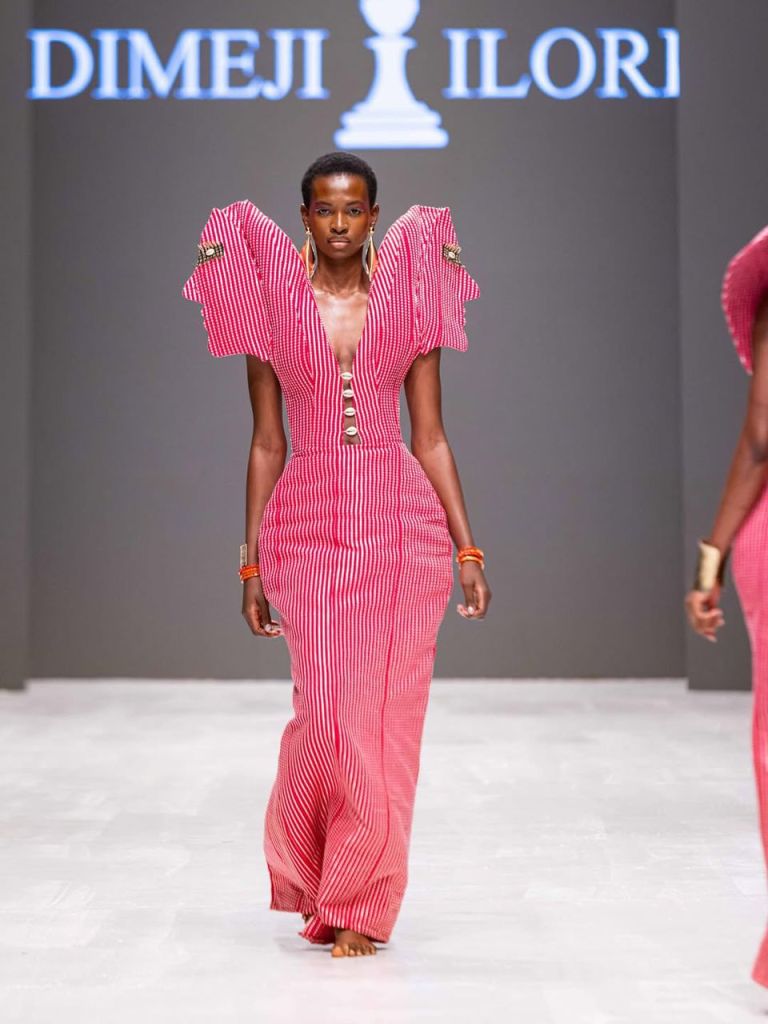
Dimeji Ilori approaches sustainability through reconstruction. As the founder of Afrowaste, he transforms discarded fabrics and factory leftovers into sharply structured fashion, making textile waste part of the design rather than something to be hidden.
Joan Nantege – Joan Jade

For Joan Nantege, history is part of the design process. The founder of Joan Jade reworks East African dress traditions through contemporary tailoring, creating womenswear that draws from the past while taking a distinctly modern approach.
Solome Kiflu – Xufan

Solome Kiflu brings together gaming culture, digital art and utilitarian streetwear through Xufan. Her architectural, Afro-futurist silhouettes offer a different way of thinking about African fashion—one that is connected not only to heritage, but to digital culture and the future.
Osime Saibu – Simeogieme

At Simeogieme, Osime Saibu combines clean geometric cuts with graphic custom textiles. The result feels almost like wearable visual design, with the clothing itself becoming a canvas for pattern and composition.
Chido Kaseke – PatCh Maoko

Chido Kaseke transforms hessian and other overlooked materials into handcrafted accessories through PatCh Maoko. Her work connects contemporary design with African craft, while giving familiar materials another life.
Maurice Niyigena – Matheo Studio

Maurice Niyigena approaches fashion like a filmmaker. At Matheo Studio, silhouette, texture and symbolism come together to create collections that feel cinematic before they feel wearable.
Sherifah Abèke Fiamavle – AjiBèkè

Sherifah Abèke Fiamavle draws from Yoruba heritage, traditional textiles and personal memory through AjiBèkè. Her pieces explore intimacy, heritage and sisterhood, creating work that feels personal while remaining connected to a wider cultural history.
REALMS – REALMS

REALMS explores the relationship between heritage, identity and contemporary expression through an eco-luxury approach to fashion. Drawing from the cultural histories of Congo-Kinshasa and Madagascar, the brand reinterprets traditional references through modern silhouettes, considered textures and detailed craftsmanship.
Its pieces are designed to connect the past with the present, bringing ancestral influences into a more contemporary visual language. With a focus on slow fashion, REALMS creates timeless pieces that place culture and conscious design at the centre of the brand.
Why platforms like this still matter
Looking at these designers together makes one thing clear: there is no single definition of what African fashion should look like.One designer is reconstructing waste materials. Another is reinterpreting East African dress traditions. Another is drawing from gaming and digital art. Others are working with indigenous textiles, craft, personal memory and visual storytelling.
The common thread is not an aesthetic. It is the opportunity to build. And that may be the bigger conversation African fashion needs to have now.For years, the question was whether African fashion could gain global attention. Increasingly, the question is what happens after that attention arrives.
Can designers turn international interest into sustainable businesses? Can African cities develop the production, retail, education, investment and fashion infrastructure that allows brands to grow at home? Can Lagos, Nairobi, Accra, Johannesburg and other creative centres become places where fashion businesses do not just emerge, but have the systems to scale?
Paris, Milan, London and New York did not become fashion capitals simply because talented designers lived there. Their influence was built around ecosystems, fashion houses, buyers, manufacturers, schools, media, retailers, events and institutions that allowed creativity to become an industry.
Africa has the designers. It has the heritage. It has the creativity and increasingly, the global attention. What remains is continuing to build the structures around that talent. That is why platforms like Africa Fashion Week London matter. They are not just creating moments for designers to be seen. At their best, they help create pathways between creativity and commerce, heritage and contemporary design, visibility and longevity.
And the designers on this year’s radar are a reminder that the future of African fashion will not be defined by one look. It will be defined by how many distinct voices are given the opportunity to build something lasting.