
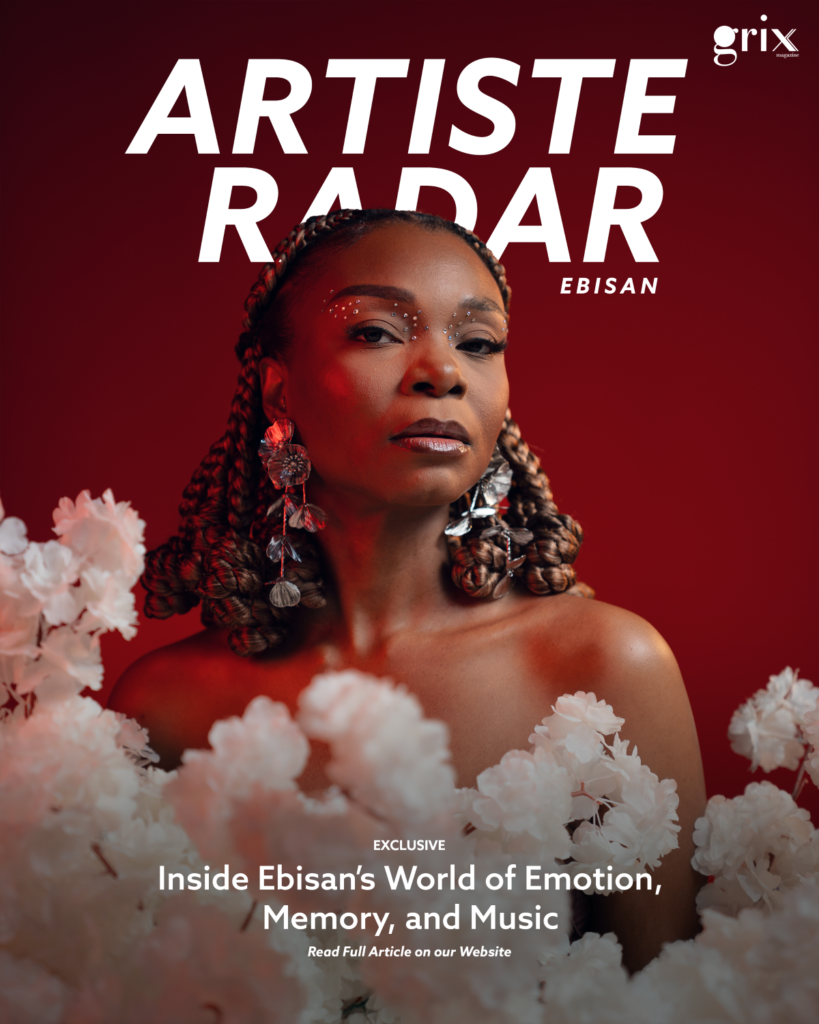
Before the conversation even settles into music, there’s a question about identity; something simple, but grounding.
Ebisan doesn’t overthink it.
“It means family is good.”
She says it plainly. No long explanation, no extra meaning added. But as the conversation unfolds, that idea of memory, of emotion, of something deeply rooted quietly shows up in the way she talks about her music.
Because for Ebisan, music doesn’t begin with sound.
“I don’t think of the style first. I always think of the story I want to tell, the memories I want to share, and the emotions that I want to convey.”
Style, genre, direction, those things come later. What matters first is feeling.
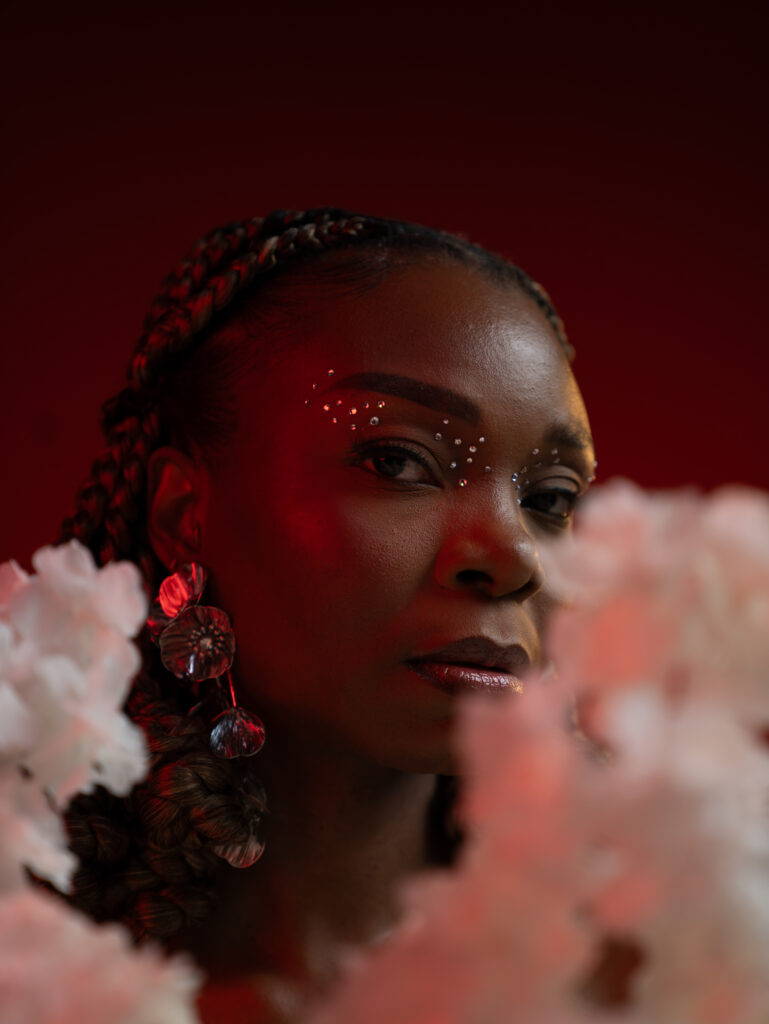
“The first thing is the emotions that I’m feeling that I want to share. And then I choose the sound that I feel suits the emotions that I want to convey.”
It’s a process that explains why her work feels different from the usual expectations of the Nigerian music scene. There’s no rush to fit into anything, just an insistence on honesty.
Even when that honesty comes with pressure.
She admits there are two sides to releasing music: one that feels overwhelmed, and one that feels excited. But in the end, one always wins.
“What I want to share is more important than the overwhelm… the excitement always outweighs the overwhelm.”
It’s that need to share and connect that keeps her grounded, even when things feel uncertain.
That same openness shows up in how she speaks about her background. Growing up across Nigeria, Saudi Arabia, and England didn’t just shape her worldview; it shaped her sound.
“Being exposed to different cultures, different mindsets, different lifestyles, has everything to do with the music that I create… it keeps me unrestricted.”
Unrestricted. Flexible. Open.
It’s what allows a song like Skin to Skin to exist exactly as it is, unfiltered and direct.
When asked what inspired it, she doesn’t try to dress it up.
“Exactly what you hear… I write about real experiences.”
That simplicity carries into her creative process, too. There’s no formula, no structured method, just lived moments turned into music.
“It’s the experiences that I’ve been through in life. I write about it, and I create… I want it to be as honest and raw and as vulnerable as possible.”
She wants the listener to feel like they’re inside the story with her. And if they don’t relate?
That’s fine too.
“At least they get a perspective that they never had before.”
It’s a mindset that traces back to how she started.
Long before studios and film projects, there was a house filled with music and play.
“I think I was maybe about seven years old… we used to write songs about everyday things. If we were hungry, we’d write about being hungry… we were always creating.”
Even now, her relationship with music still feels deeply personal, almost spiritual.
“When I’m in the zone, it’s like I’m in another space… I’m downloading… It’s definitely a spiritual experience.”
Sometimes, the songs don’t even come consciously.
“There are times when I literally dream of a song… then I wake up, and I have to write it down quickly.”
It’s also why the idea of “creative block” doesn’t really exist for her.
“I’ve never had a creative block… my mind is constantly creating. It’s always about timing.”
Timing, not pressure.
That distinction also defines how she’s navigated the industry itself. With a background in accounting and finance, choosing music wasn’t accidental; it was intentional.
“If I’m going to leave that world and move to music, I must stay true to who I am.”
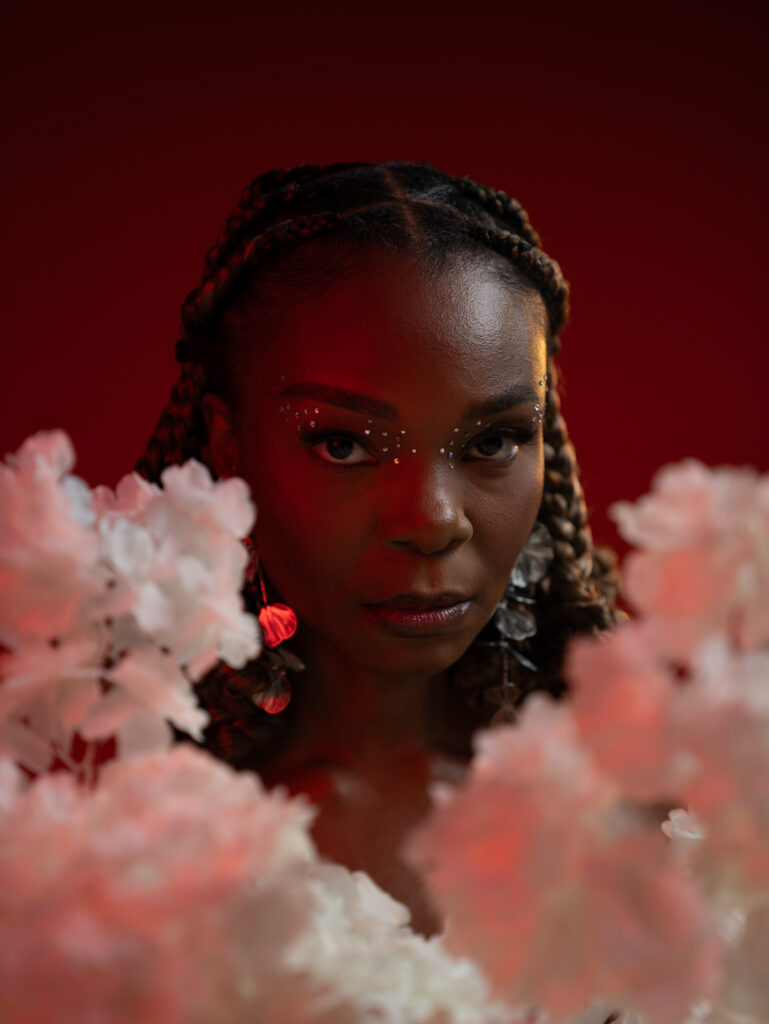
There’s room for growth, for experimentation, but never at the cost of identity.
And even when success comes, she measures it differently.
Talking about her NMVA award-winning video for Jowo, she smiles more at the memory than the recognition.
“Making the video was the main thing… that was one of the best experiences of my life. Winning the award was just the cherry on top.”
Because for her, the process, the feeling, the people, and the moment matter more than the outcome.
That same emotional core is what runs through her music. Love, grief, vulnerability, it’s all there, not for effect, but for release.
“Songwriting is therapy for me… It’s a way of processing what I felt.”
And if someone else hears it and feels seen?
“That would be a very beautiful thing.”
Outside of music, her world slows down. A perfect day isn’t loud or crowded, it’s quiet, almost private.
“I’m a nocturnal person… it would be at night when everybody is asleep… just quiet time… and there’s always chocolate involved.”
And at the centre of it all, beyond the music, beyond the process, beyond the industry, there’s something steady she holds onto.
“I remain hopeful… even when things seem dark, I believe there is light.”
Because in Ebisan’s world, music isn’t just something you hear.
It’s something you feel, something you remember, something you carry.